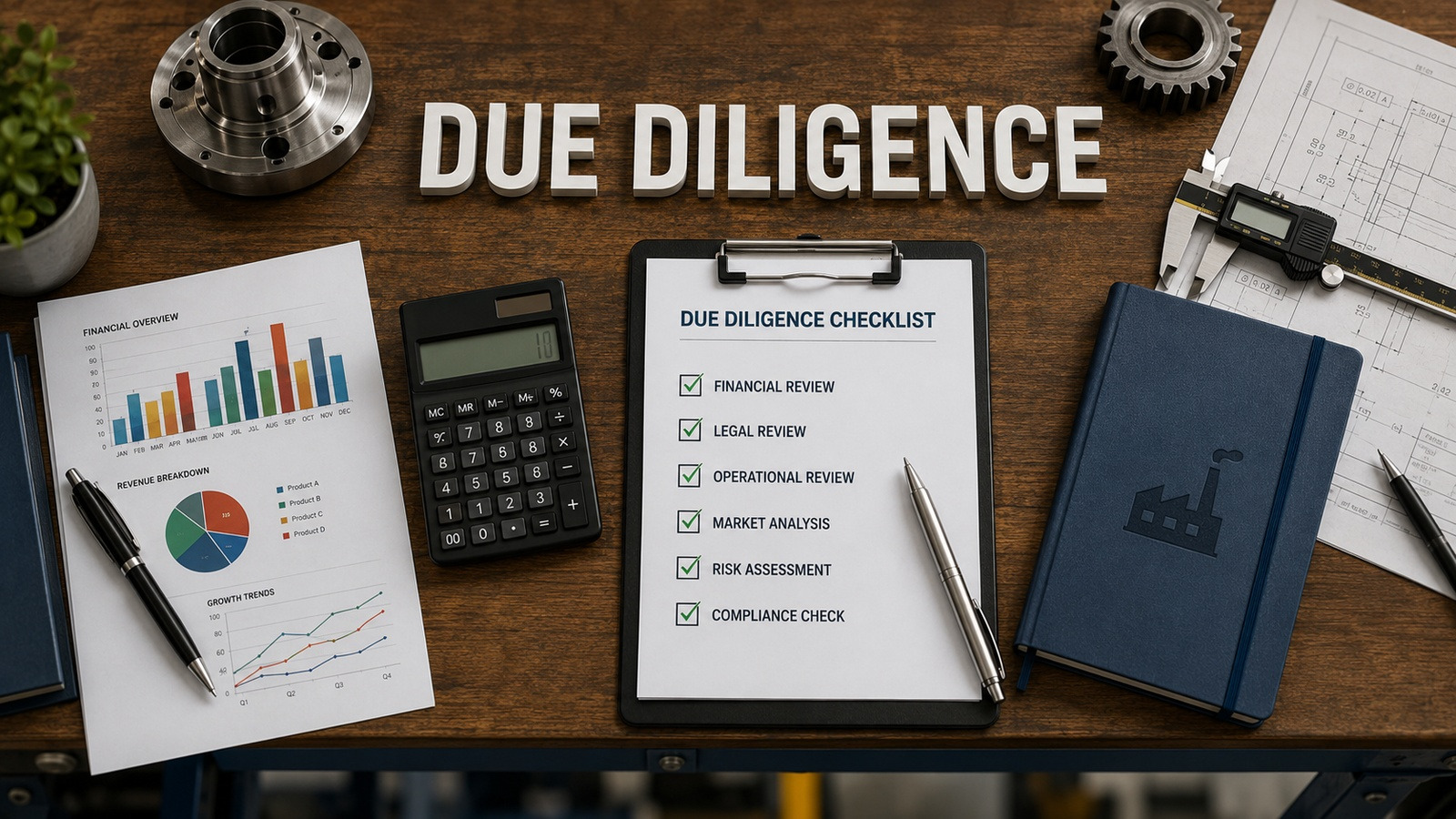
Due diligence starts before formal due diligence. What buyers should investigate about a deal, and about the people offering it.
First in a two-part series on due diligence.
From Entrepreneur Magazine, Due Diligence is defined as, “A reasonable investigation of a proposed investment deal and of the principals offering it, before the transaction is finalized to check out an investment's worthiness; generally performed (with the assistance of) the investor's attorney and accountant."
The due diligence phase in our world officially begins when both the buyer and the seller sign the Letter of Intent (LOI). But as a potential buyer, there is plenty of information you can and should gather before you even consider submitting an LOI.
We at Accelerated Manufacturing Brokers, Inc. work with many first-time buyers, and they generally fall into one of two categories – those who ask A TON of questions before submitting an LOI, and those who don’t. For those of you in the second category, you need to take a page from the first group's notebook and learn to ask, ask, ask! By doing so, you will be empowered to make an informed decision more quickly, potentially save money in professional fees later, and stand a good chance of experiencing a smoother and more expeditious official due diligence.
In this blog and the next, we’ve assembled our recommendations for our Buyer’s Top 10 – What You Should Know before due diligence and why each is important to your decision-making process. In this blog, we’re highlighting the first five.
SHAREHOLDERS INVOLVEMENT
- WHY is this important?
- To maximize the opportunity for success, the business you are exploring mustn’t be completely dependent upon the seller. A well-run company will have other individuals in place who also perform the same functions as the shareholders. It’s important that, early in the process, before due diligence, you understand the situation. So, consider asking:
- What, specifically, does each shareholder do daily? Does anyone else in the company duplicate their job function(s)? If not, is anyone in training to perform these duties?
- How much of sales are dependent upon relationships with any one of the shareholders?
- To maximize the opportunity for success, the business you are exploring mustn’t be completely dependent upon the seller. A well-run company will have other individuals in place who also perform the same functions as the shareholders. It’s important that, early in the process, before due diligence, you understand the situation. So, consider asking:
PRODUCT INFORMATION
- WHY is this important?
- If a business you are looking at has registered patents or trademarks, those generally increase the company's IP value and overall value. However, it’s important to understand how much “runway” is left on the patent ... said another way, “When does the patent/trademark expire?”
- Additionally, when speaking with a potential seller, we often learn about a secondary product line they have been working on but have not given much attention to. With the infusion of marketing and business development, this could potentially be a whole new revenue stream for the acquiring entity.
CUSTOMER CONCENTRATION
- WHY is this important?
- There can be danger in acquiring a business with sales being generated by one or two customers. That said, we recently sold a company just like this. If the relationships are long-standing, or if the parts being produced are spec’d into a design or a critical component of the customer’s product, the danger diminishes. The point is to be sure you have an understanding of the customer landscape. Suggested requests:
- A revenue report outlining percentage of sales by industry
- A revenue report outlining the percentage of sales by customer within each industry. (At this point in the process, you should expect the customer’s names to be redacted)
- There can be danger in acquiring a business with sales being generated by one or two customers. That said, we recently sold a company just like this. If the relationships are long-standing, or if the parts being produced are spec’d into a design or a critical component of the customer’s product, the danger diminishes. The point is to be sure you have an understanding of the customer landscape. Suggested requests:
SALES INFORMATION
- What kind of sales information and WHY is this important?
- The sales information we are referring to here relates to the type of work being done – contract work vs. one-off projects. There is an upside to each and challenges with each. Wrapping your brain around this before due diligence will provide insight into other things you can expect down the road.
- Contract work is guaranteed for a specific period of time… could be one year, could be five years. In some cases, the wear and tear of repetitive work like this can be harder on the equipment than one-off jobs, which should raise a question about annual capital expenditures.
- One-off projects generally command higher margins, and the wear and tear on the equipment, as stated above, can be less. However, pipeline fulfillment is critical with one-off projects, which may require a greater focus on sales development, networking, and getting out in front of upcoming projects in the industries served.
- What percentage of your sales are repeat sales vs. new business? Simple enough, but understanding this will impact your sales strategy going forward.
- The sales information we are referring to here relates to the type of work being done – contract work vs. one-off projects. There is an upside to each and challenges with each. Wrapping your brain around this before due diligence will provide insight into other things you can expect down the road.
OVERALL COMPANY CONCERNS
- What does this mean and why is it important?
- Many of our sellers have been in business for 20, 30, or 40+ years. As they’ve worked hard to grow their business and keep jobs in their communities, things may have happened. This stuff could be related to OSHA or EPA issues, legal or workers’ compensation claims. None of these are guaranteed deal breakers, but gaining insight before due diligence prevents unanticipated surprises later. For many of our sellers, OSHA issues are rare and minor. EPA regulations vary by state, so be familiar with what’s required by the state in which the business of interest is located. Workers’ comp and legal issues come in all shapes and sizes, so one more time, just be sure you’re asking the right questions.
Each buyer we work with comes to us with a different set of expectations, vision, experience, skillset, and strengths. At Accelerated Manufacturing Brokers, Inc.,, we believe buyers should be educated and informed before due diligence, and thus empowered to make this exciting and life-changing decision from the best possible place.
Next week, part two in this series.