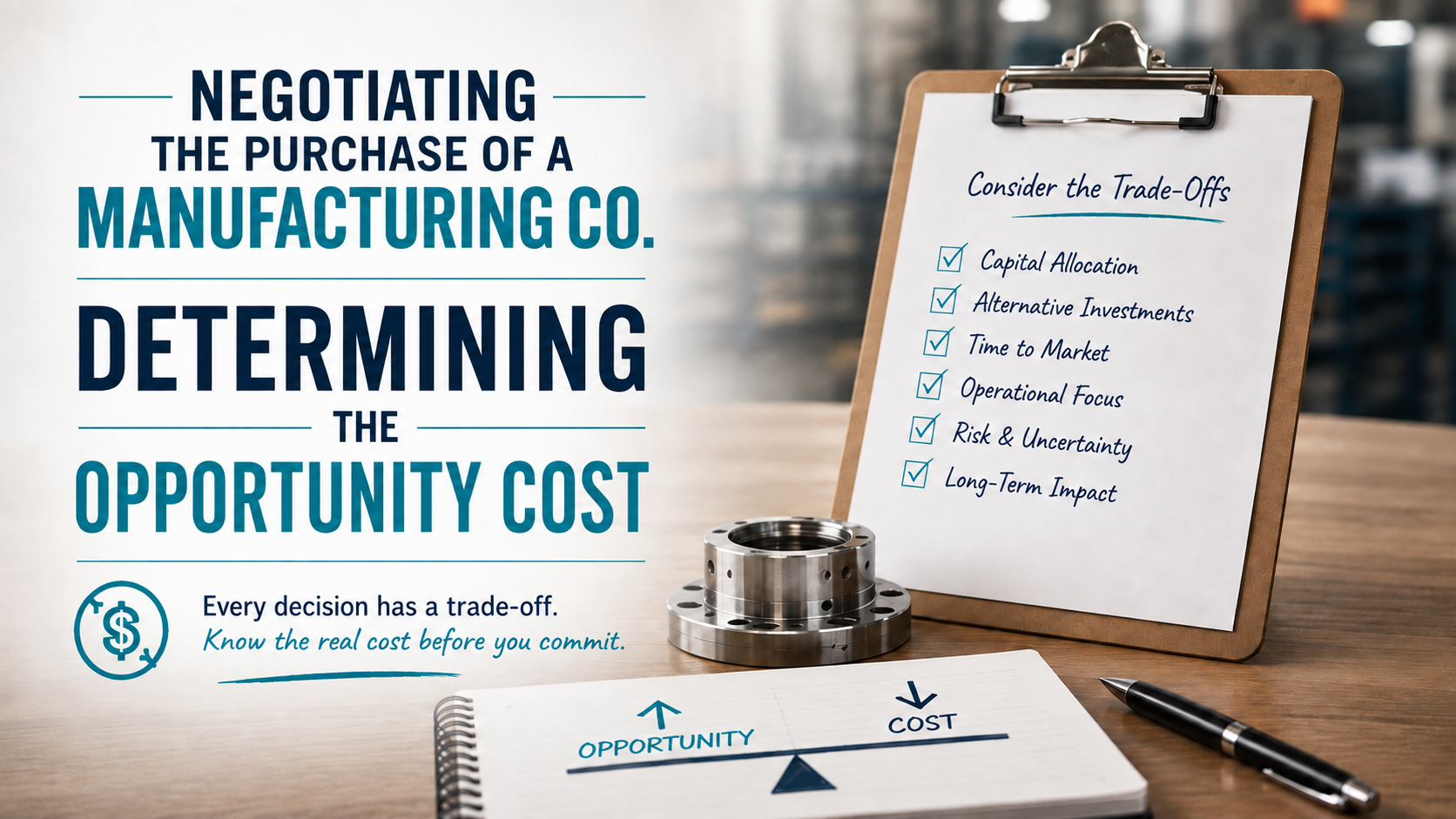
Opportunity cost is what you give up to get something else. How it should shape the way you negotiate a manufacturing purchase.
Negotiating the Purchase of a Manufacturing Business: Determining the Opportunity Cost
According to BusinessDictionary.com, “opportunity cost” is the benefit, profit, or value given up to acquire or achieve something else. Opportunity costs are not recorded on any financial statement or tax return. They are recognized in decision-making by comparing the cash outlay with the resulting profit or loss, which may be tangible or intangible.
A buyer can use the concept of “opportunity costs” when deciding how much to spend on a manufacturing company and how much to negotiate. Negotiations are a natural part of any business acquisition, and opportunity costs should be heavily considered.
A Real-World Manufacturing Acquisition
We recently received an exclusive listing for a manufacturing company with great bones, a stellar reputation, and super growth potential. The production staff was experienced, skilled, and staying on. The administrative staff was in place with no anticipated changes. Within 30 days of posting the listing, we brought in one buyer who, two weeks later, submitted a Letter of Intent. Our buyer had manufacturing chops; his vision for his role in the company fit; he had financing in place; and he had a strong desire to relocate.
Two Key Issues in the Negotiation
The LOI was presented to the seller, and, as anticipated, two issues needed to be addressed. First, the LOI included a purchase price $100K lower than the seller hoped for. Second, the buyer requested that the seller stay on longer than he intended under a work contract.
Weighing Price Against Long-Term Value
The buyer could have held firm on his offering price and negotiated only on the consulting term. He had already looked at several opportunities previously. He needed and wanted to do the right thing for himself and his family. What could he gain by standing firm on his offering price? When he considered the “opportunity cost” of that additional $100K over the years he was planning to own and grow this business, the decision was made for him.
The Potential Cost of Walking Away
Had he not come to this conclusion, he likely would have missed this opportunity. We had other potential buyers interested. Our largest category of buyers is individuals leaving corporate America in search of entrepreneurship—all with different goals, skill sets, interests, and geographic preferences.
Look Beyond the Purchase Price
In every circumstance, the buyer needs to ask the right questions, conduct proper due diligence, and ensure their role in the company aligns with their goals. In the end, each needs to determine the opportunity cost of negotiating so they do not step over dollars to pick up dimes.