Manufacturers can strengthen their workforce by creating apprenticeship programs, partnering with local schools, and developing clear career paths. Learn how to attract, train, and retain skilled employees while building a more valuable business.
How Manufacturers Can Build and Retain a Skilled Workforce Through Apprenticeships
Manufacturers continue to face one of the industry’s most persistent challenges: finding skilled employees.
There are apprenticeship opportunities available for many high-demand manufacturing careers, including:
- CNC Set-Up Programmer — Milling and Turning
- Precision Machinist
- Industrial Maintenance Repairer
- Mold Maker
- Die Casting and Plastic Molding
- Plastics Fabricator
- Tool and Die Maker
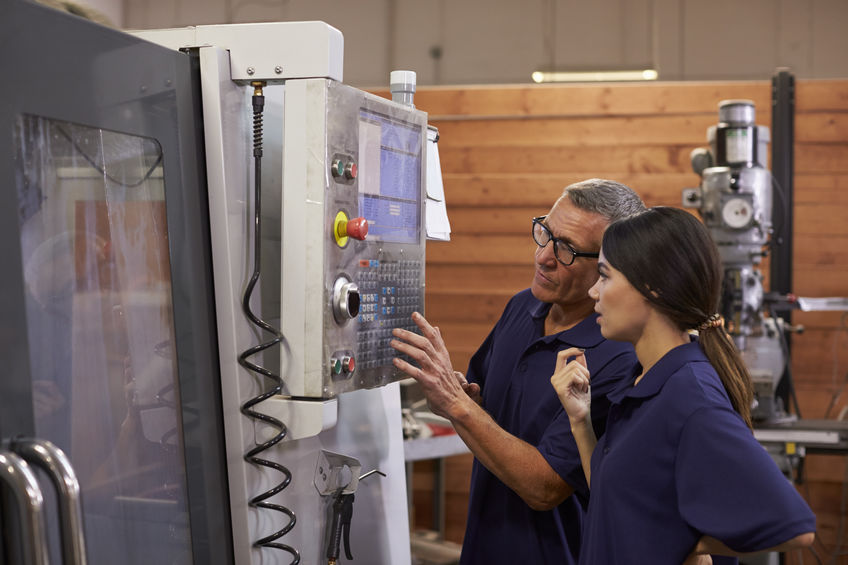
Apprenticeships give manufacturers an opportunity to develop skilled employees from the ground up while giving young people a practical path into well-paying manufacturing careers.
For these programs to succeed, manufacturers themselves need to take an active role.
That means building relationships with local high schools, youth organizations, community colleges, trade schools, and vocational programs—and helping students and their families understand what modern manufacturing careers actually look like.
Apprenticeships Can Help Close the Manufacturing Skills Gap
One of the biggest advantages of an apprenticeship is that employers can train people specifically for the skills their businesses need.
Rather than waiting for the perfect experienced employee to walk through the door, manufacturers can identify people with the right aptitude, attitude, and willingness to learn—and develop them internally.
Registered apprenticeship programs can combine:
- On-the-job training
- Classroom instruction
- Industry-recognized credentials
- Mentoring
- Progressive skill development
- A clear career path
For small and mid-sized manufacturers, that can be especially valuable because experienced machinists, toolmakers, maintenance technicians, and other skilled workers are not always easy to find.
Manufacturers Should Work With Local Schools and Training Programs
One of the best places to begin building a talent pipeline is close to home.
Manufacturers should get to know:
- High school trade and STEM teachers
- Vocational schools
- Community colleges
- Workforce-development organizations
- Youth groups
- Local career programs
Students often have very little exposure to manufacturing unless someone in their family already works in the industry.
That means manufacturers need to show them what these careers actually offer.
Invite students into your facility.
Participate in career days.
Work with teachers.
Offer internships.
Sponsor manufacturing-related programs.
Give young people an opportunity to see real equipment, real production, and real career paths.
If they never see what modern manufacturing looks like, they may never consider it.
State and Local Programs Can Help Employers
Workforce-development programs vary from state to state, but manufacturers may have access to resources that can help offset the cost and administrative burden of developing apprentices.
Depending on the location and program, assistance may include:
- Apprenticeship consultants
- Employer tax incentives
- Tuition support
- Wage assistance
- Training grants
- Community-college partnerships
- Workforce-development funding
Some states have built strong apprenticeship models by bringing together government, education, and industry.
Others have focused heavily on high-school pre-apprenticeship programs so students can begin exploring manufacturing careers before graduation.
The lesson for manufacturers is simple:
Before assuming you have to build everything yourself, find out what resources already exist in your area.
You Can Also Build Your Own Apprenticeship Pipeline
If your state or local training programs do not meet your needs, that doesn’t mean you have to wait.
Manufacturers can build their own programs or partner with other local companies facing the same workforce challenges.
Sometimes the most effective apprenticeship programs begin at the grassroots level.
A great example comes from K.A.M. Tool & Die in rural North Carolina.
How K.A.M. Tool & Die Built Its Own Talent Pipeline
Don Mitchell, a founding partner of K.A.M. Tool & Die, began by developing relationships with local high-school trade teachers.
He asked those teachers to identify juniors and seniors who demonstrated:
- A strong work ethic
- Manual dexterity
- Technical aptitude
- Responsibility
- Most importantly, a desire to learn
Students who entered K.A.M.’s internship program spent two afternoons each week learning how the business operated on the shop floor.
That gave both the student and the company a chance to evaluate whether manufacturing could be a good long-term fit.
Start Them Slowly and Let Them Learn the Business
Don didn’t put students on complex equipment the first day.
He started them slowly.
Initial responsibilities included general cleanup work, which helped the company evaluate whether the student could follow instructions, take responsibility, and complete assigned tasks.
From there, students began receiving deliveries of replacement parts, tools, safety equipment, and raw materials.
They entered receipts into the company’s inventory-management system and learned where materials and tools belonged.
That may sound simple, but it helped students become familiar with the everyday language, materials, and workflow of the manufacturing environment.
Over time, the students were encouraged to ask questions and learn from experienced employees.
Before completing the internship, qualified students were given an opportunity to set up and manufacture a part under the supervision of an experienced employee.
That gave them a real taste of what a manufacturing career could look like.
Turn Internships Into Long-Term Manufacturing Careers
Students who wanted to continue could enter K.A.M.’s apprenticeship program, pursue a community-college degree, and continue working with the company.
K.A.M. paid their tuition while they worked their way through school.
At the time this program was described, every student K.A.M. accepted into the apprenticeship had remained with the company.
Don Mitchell explained the value of the approach this way:
“If they have a good work ethic and a desire to learn, I can get them started on a career that will eventually lead them to a six-figure salary with great benefits and give them a great start in life.”
He also pointed out another important advantage.
Employees trained through the program learn on K.A.M.’s equipment and according to K.A.M.’s processes.
That can be more valuable than hiring an experienced worker from another company and then having to retrain them.
Recruiting Skilled Employees Is Only Half the Battle
Once you invest in developing good employees, you have to keep them.
Continuing education, training, recognition, career development, and strong management all play important roles in employee retention.
If turnover is high, business owners need to understand why people are leaving.
Pay and benefits certainly matter.
But employees are often looking for more than a paycheck.
They want to feel that they are respected, have opportunities to advance, and can see a future with the company.
Practical Ways to Retain Manufacturing Talent
There are several things manufacturers can do to improve retention.
Ask Employees for Their Input
Employees often know where processes are inefficient because they deal with those problems every day.
Create opportunities for them to provide ideas and feedback.
Strengthen the Employee-Manager Relationship
Managers should maintain regular contact with shop-floor employees.
Many people don’t leave companies—they leave managers.
Good communication can prevent small frustrations from becoming reasons to leave.
Improve the Work Environment
Physical demands and wasted effort can lead to dissatisfaction.
Look for opportunities to improve plant layout, tool placement, workflows, lighting, ergonomics, and organization.
A better-run shop is often a better place to work.
Provide a Clear Career Path
Employees should understand what advancement looks like.
What skills do they need to learn?
What position comes next?
What can they earn as their capabilities increase?
People are more likely to stay when they can see a future.
Invest in Coaching and Training
If one department experiences significantly more turnover than others, the problem may not be the employees.
A manager may need coaching in leadership, communication, or other management skills.
Build Team Spirit
Employee events, community service, company outings, and other shared activities can help develop stronger relationships among employees.
A healthy culture can become a significant competitive advantage when skilled workers have multiple employment options.
Support Work-Life Balance
Flexibility can matter.
Helping employees manage occasional personal responsibilities, family needs, childcare, eldercare, or scheduling challenges can help build loyalty.
Plan for Retirement Before Knowledge Walks Out the Door
Experienced employees eventually retire.
Instead of allowing decades of knowledge to disappear on their last day, consider transition arrangements that allow veteran employees to work reduced schedules while mentoring younger team members.
That helps transfer institutional knowledge while allowing experienced employees to gradually wind down their careers.
A Strong Workforce Also Makes a Manufacturing Company More Valuable
Workforce development isn’t only an operational issue.
It can directly affect the value and marketability of a manufacturing company.
Mark Beck, shareholder and acquirer of K.A.M. Tool & Die, summed it up well:
“In today’s competitive world, talent is the most precious of all assets. When evaluating acquisitions we like to see a healthy mix of people at every stage of their careers. We need experienced industry veterans, young fresh apprentices, and everyone in between. At the end of the day, we really believe that the best team wins.”
That is an important point for manufacturing business owners who may eventually consider selling.
A buyer wants to know that the company has a workforce capable of continuing after ownership changes.
A business with aging employees, no succession plan, and no pipeline of younger talent presents greater risk.
A company that has experienced employees, younger workers being trained, documented processes, and a culture of knowledge transfer presents a very different picture.
Build the Workforce Before You Need It
There are many resources available to manufacturers interested in apprenticeships, internships, and workforce development.
But manufacturers cannot wait for schools, government agencies, or workforce organizations to solve the labor problem for them.
Get involved.
Get to know the teachers, parents, and students in your community.
Participate in career days.
Open your plant to young people.
Sponsor programs.
Create internships.
Give interested students an opportunity to experience real-world manufacturing.
Not every student will choose manufacturing.
That’s fine.
The goal is to find the ones who do—and give them a path to build a career.
Once you have developed that talent pipeline, work just as hard to retain those employees as they grow within your company.
As Accelerated Manufacturing M&A President Fran Brunelle has noted, manufacturing companies that develop and maintain a pipeline of skilled workers are not only better positioned to compete—they can also become more attractive to quality acquisition candidates when the time eventually comes to sell.
A strong manufacturing company needs more than modern equipment and good customers. It needs people capable of carrying the business forward.