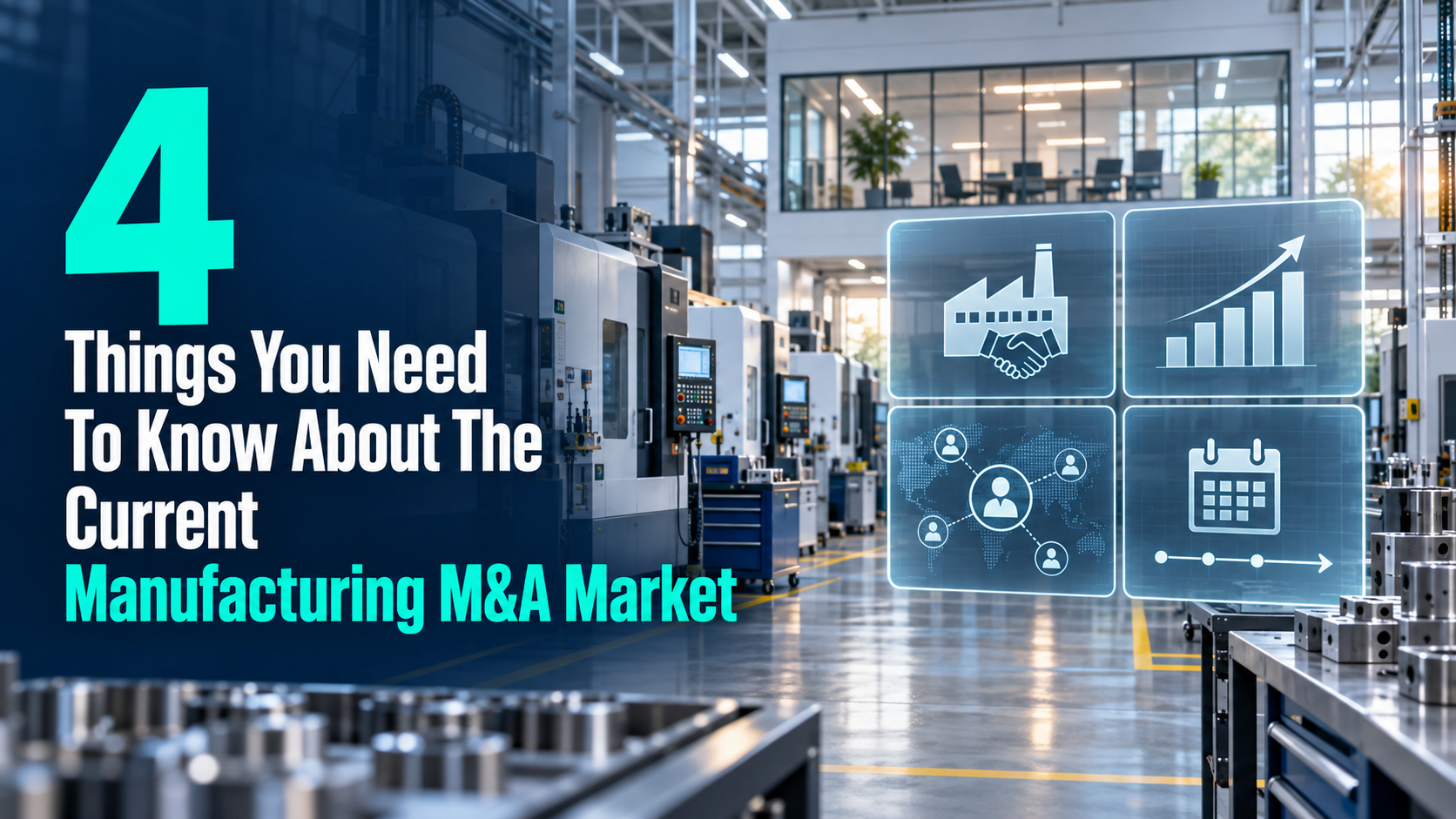
Four things buyers and sellers need to know about today's manufacturing M&A market, drawn from the quarterly Market Pulse Survey.
Key Findings From the Q2 2016 Market Pulse Survey
Each quarter, the IBBA and M&A Source present the Market Pulse Survey with support from the Pepperdine Private Capital Markets Project and Pepperdine Graziadio School of Business & Management.
The report measures current market conditions for businesses sold within the United States. The Q2 2016 report contained several interesting insights about the manufacturing sector that every business owner should understand. Here are four things you need to know about the current manufacturing M&A market.
1. Manufacturing Businesses Sold More Than Any Other Type of Business
During the second quarter of 2016, more manufacturing companies were sold in the United States than any other type of business in both the $1–$5 million and $5–$50 million revenue categories.
2. Multiples Are Trending Upward and Sellers Are Receiving Close to Their Asking Prices
For lower-middle-market transactions, multiples during Q2 ranged from 4.75 to 5.75. Businesses with revenues between $2 million and $50 million sold for an average of 98% of their asking price.
For businesses with revenues between $2 million and $5 million, sellers received 81% cash at closing, with 10% of the transaction financed by the seller and the balance structured as an earn-out.
Businesses with revenues between $5 million and $50 million sold with 76% cash at closing, 14% seller financing, and the balance structured as an earn-out.
3. Who Is Buying and Where Do Buyers Come From?
For transactions under $5 million, 42% of buyers are first-time buyers, while 40% are repeat business owners.

At Accelerated Manufacturing Brokers, Inc., we found the percentage of first-time buyers to be substantially higher during the second quarter. In fact, first-time buyers represent our largest buyer category for transactions between $2 million and $15 million.
For transactions between $5 million and $50 million, the Market Pulse report showed that 39% were sold to private equity firms and 30% were sold to existing companies pursuing growth through acquisition.
For lower-middle-market transactions, 41% of buyers come from more than 100 miles away. An additional 39% come from more than 50 miles but less than 100 miles away.
This statistic should be of paramount concern to business owners seeking to engage an M&A advisory or business brokerage firm. The firm you hire must have more than a local audience to successfully sell your manufacturing company.
4. How Long Does It Take to Sell a Manufacturing Business?
For companies with revenues between $1 million and $50 million, the average time to close was nine months. Approximately four months elapsed between acceptance of the Letter of Intent and closing.
At Accelerated Manufacturing Brokers, Inc., we continue to experience a slightly shorter average timeline.
M&A professionals working with lower-middle-market businesses generally believe that we are currently in a seller’s market. Manufacturing companies continue to dominate and remain among the most sought-after businesses in the lower middle market.
Clearly, the current manufacturing M&A market offers good news for retiring business owners.
What Could Your Manufacturing Business Sell For?
Who is the most likely buyer, and how long will it take to sell?
Find out without cost or obligation by contacting Accelerated Manufacturing Brokers, Inc., at 908-387-1000 or Info@AcceleratedMfgBrokers.com. You can also reach out through our website, and we will contact you.
It is important not to delay your exit planning. Our experience has shown that hundreds of transactions were never completed—and many businesses are no longer operating—because sellers waited too long to act during the downturns of 2000 and 2008.
We believe another recession is coming. Act before the next recession to maximize the value of your retirement.
Start planning your exit today so you can benefit from this seller’s market.